
Category: latex
-
Learning LilyPond
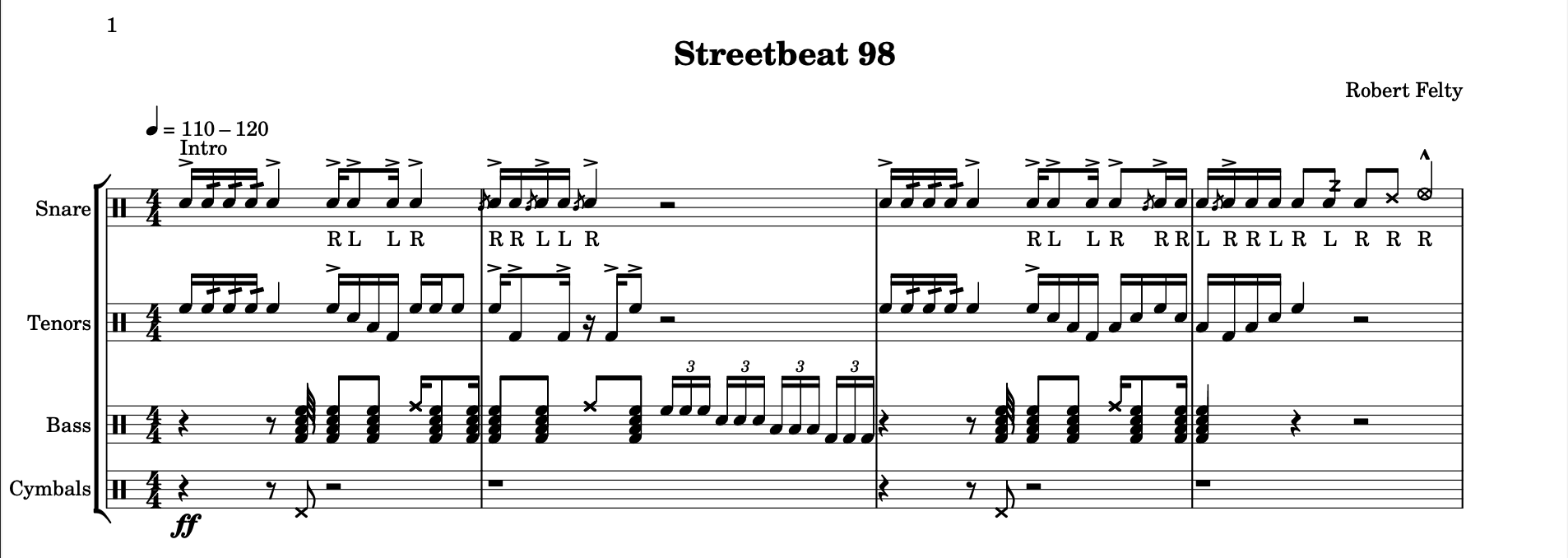
I have been a musician for over 30 years. During that time there were periods where I practiced up to 8 hours per day and performed several times per month. There were also periods in which I didn’t practice or perform for months or years. In the past year or so I have gotten back…
-
UNIX tip of the day: Inserting files with sed
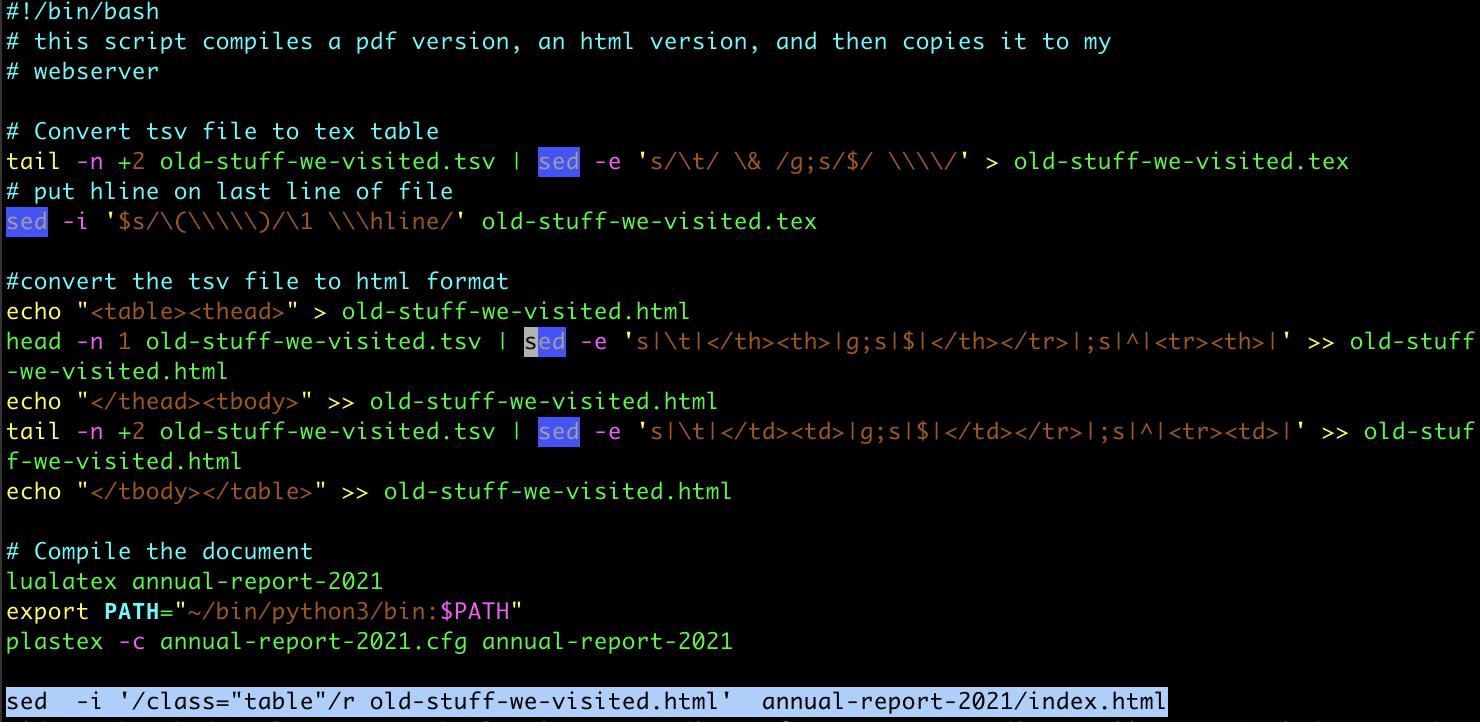
Today I was working on my family 2021 annual report. Usually I write this in December, but I am a bit behind this year. We have been writing one of these since 2006, and we generally have a lot of fun doing it. I write them in LaTeX, because I like LaTeX, and it produces…
-
LaTeX tip of the day: delete intermediate files
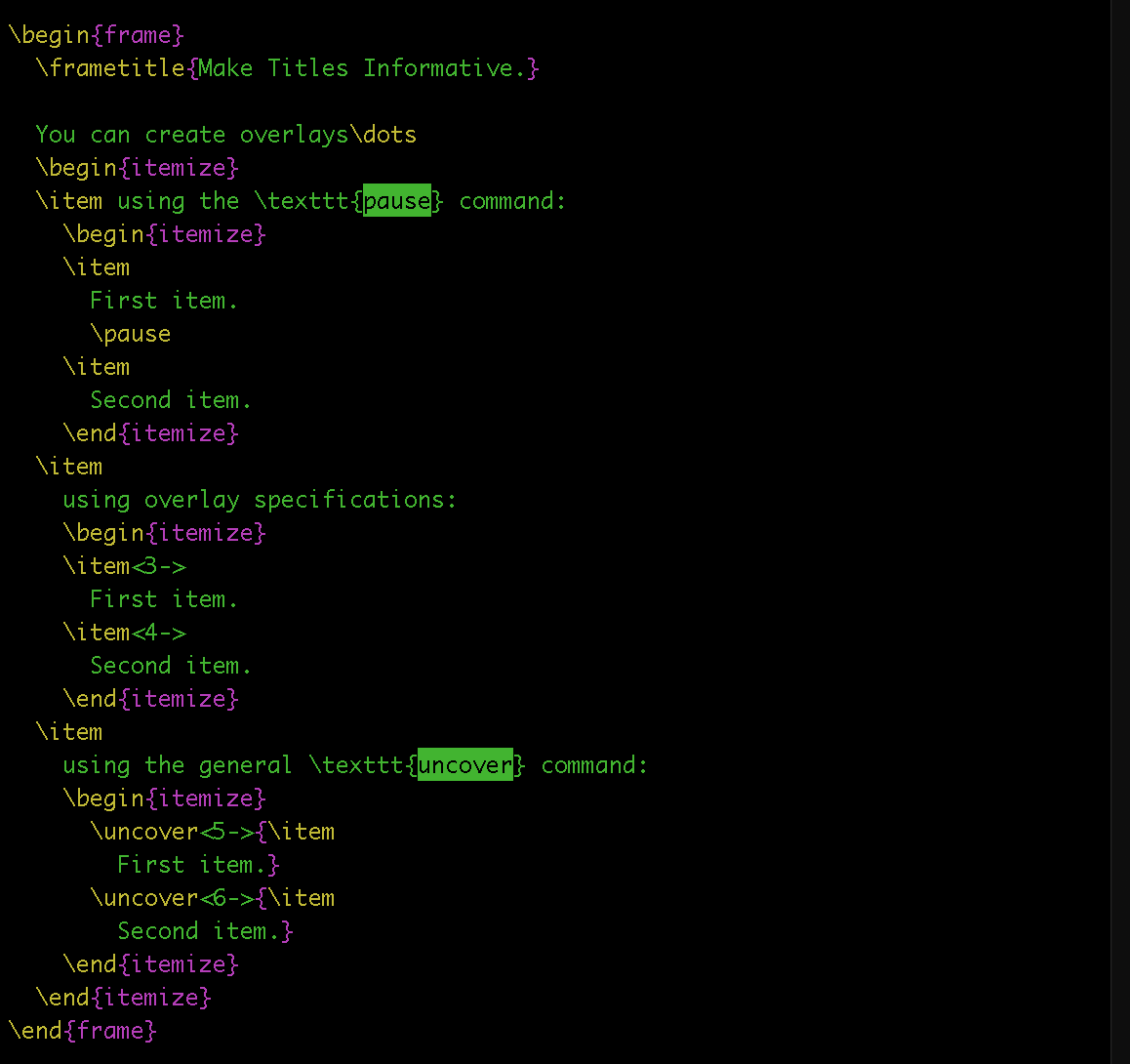
15 years ago, I was using LaTeX on a daily basis for writing my dissertation, articles, and presentations. I used the beamer package to create both slides and notes with the same source for several courses I taught. I am planning on giving a presentation soon and since I am lazy, I wanted to copy/paste…
-
Small fix for article class in plasTeX
I recently found a small error in plasTeX, the program I like to use to convert latex to html. Unfortunately, it looks like it is not being actively developed anymore, but since it is open-source, and it is written in python, which I know, I was able to figure out the issue in not too…
-
Em dash in LaTeX
My friend Daniel Reeves was recently discussing different ways to typeset em dashes. Here is the way I like to do it in LaTeX. \documentclass{minimal} %this sets up a new command \dash, which makes nice dashes \DeclareRobustCommand\dash{% \unskip\nobreak\thinspace\textemdash\thinspace\ignorespaces} \begin{document} Let’s test out several different variants on making an em dash using the \LaTeX typesetting system…